

Succulents are so easy to maintain and can be grown indoors and outdoors, depending on the variety. There are so many different types of succulents, we thought we should highlight some of the succulents that are easy to care for, especially for beginners.
Succulents are nature’s little masterpieces—low-maintenance, versatile, and available in an array of shapes, colors, and sizes. If you’re new to gardening, succulents are the perfect way to bring life and charm into your home or garden. Let’s explore some beginner-friendly options that are easy to care for and thrive almost anywhere.
Different Types of Succulents for Beginners
Aloe
Widely known for its medical properties, aloe vera is quite a common succulent, and there are a bunch of different varieties. All species need bright natural light. Ideally not direct sunlight, especially through windows in your home. Aloe can grow in soil and also just in a base of water. Depending on what you are looking for, it is a great succulent for inside or outside your home.
Key Features of Aloe
- Colors: Aloe leaves are typically green but can sometimes feature shades of gray, blue-green, or even speckled patterns depending on the variety. When healthy, these colors are vibrant and can add a natural aesthetic to any space.
- Growth Habits: Aloe grows in rosettes with fleshy, pointed leaves that store water, allowing the plant to thrive in dry conditions. Over time, some varieties can produce offsets or “pups,” creating clusters of plants that are easy to propagate.
- Unique Traits: Known for its gel-filled leaves, aloe is celebrated not only for its beauty but also for its soothing, skin-healing properties. Additionally, its ability to thrive in a variety of conditions makes it an excellent choice for gardeners of all skill levels.
Care Tips
Proper care is essential to ensure your aloe plant remains healthy and thriving. Here are some important guidelines to follow:
- Sunlight: Aloe plants love bright, indirect sunlight. If kept indoors, place them near a sunny window where they can receive plenty of light but avoid scorching direct afternoon sun, which may cause the leaves to turn brown. Outdoors, choose a spot with partial shade in regions with intense heat.
- Watering Needs: Aloe is a drought-tolerant plant and thrives on minimal watering. Allow the soil to dry out completely between waterings to prevent root rot. Overwatering is a common mistake—water sparingly, typically every two to three weeks, depending on the environment’s humidity.
- Suitability: Aloe is highly versatile and can adapt to both indoor and outdoor environments. Indoors, it makes a perfect low-maintenance houseplant, while outdoors, it can flourish in well-draining soil and mild climates. Protect it from frost during colder months by bringing it indoors or using a protective cover.

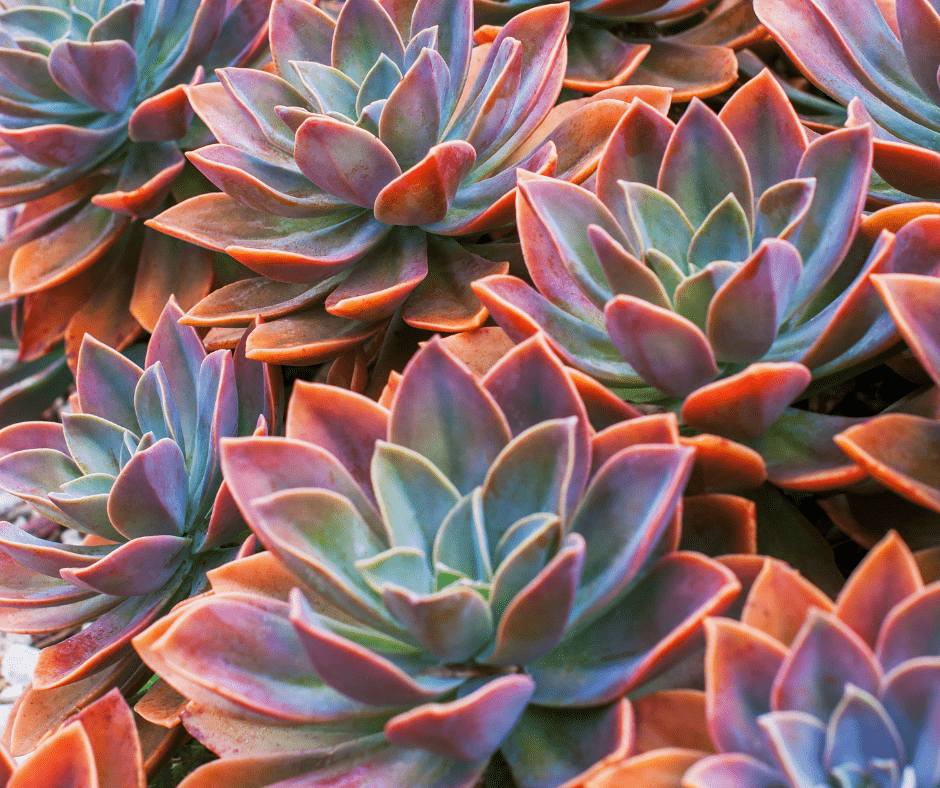
Echeveria
These beautiful succulents form beautiful rosettes in a huge variety of colours and shapes. A magnificently attractive succulent that is so easy to grow in a pot or in a garden bed. There are endless options of Echeveria to choose from. Colours ranging from blue, greys, purples and you may even find some variegated varieties as well.
Key Features
- Colours: Echeveria are renowned for their striking palette of colours, which include soft blues, silvery greys, pastel pinks, purples, and even vibrant greens. Some varieties offer stunning variegated patterns, adding further visual interest.
- Growth Habits: These succulents naturally form compact rosettes, making them perfect for both container gardening and ground cover. Many varieties produce offsets or “pups,” allowing the plant to multiply and spread over time.
- Unique Traits: Echeveria are drought-tolerant and thrive in well-draining soil, requiring minimal maintenance. During the warmer months, they may produce tall, arching stems of delicate bell-shaped flowers, adding charm and elegance to any garden or indoor setting.
Care Tips
To keep your Echeveria thriving, it’s essential to provide the right care tailored to their natural preferences:
- Sunlight: Echeveria love bright, indirect sunlight, and most varieties thrive with at least 4 to 6 hours of light daily. If grown indoors, place them near a sunny window, preferably south or west-facing. Be cautious of extreme midday sun, especially for younger plants, as it can lead to sunburn.
- Watering Needs: These succulents prefer the “soak and dry” method. Water deeply, ensuring the soil is thoroughly moist, but allow the soil to dry out completely before the next watering. Avoid letting water sit on the leaves or in the rosette, as this can lead to rot. During winter, reduce watering frequency since the plant enters a dormant phase.
- Indoor/Outdoor Suitability: Echeveria can adapt to both indoor and outdoor environments. When grown indoors, ensure proper airflow and minimal humidity to prevent fungal issues. Outdoors, they thrive in well-lit, dry areas but should be protected from frost and overly wet conditions. If frost is expected, consider moving potted plants indoors or covering garden beds with frost cloth.
Crassula
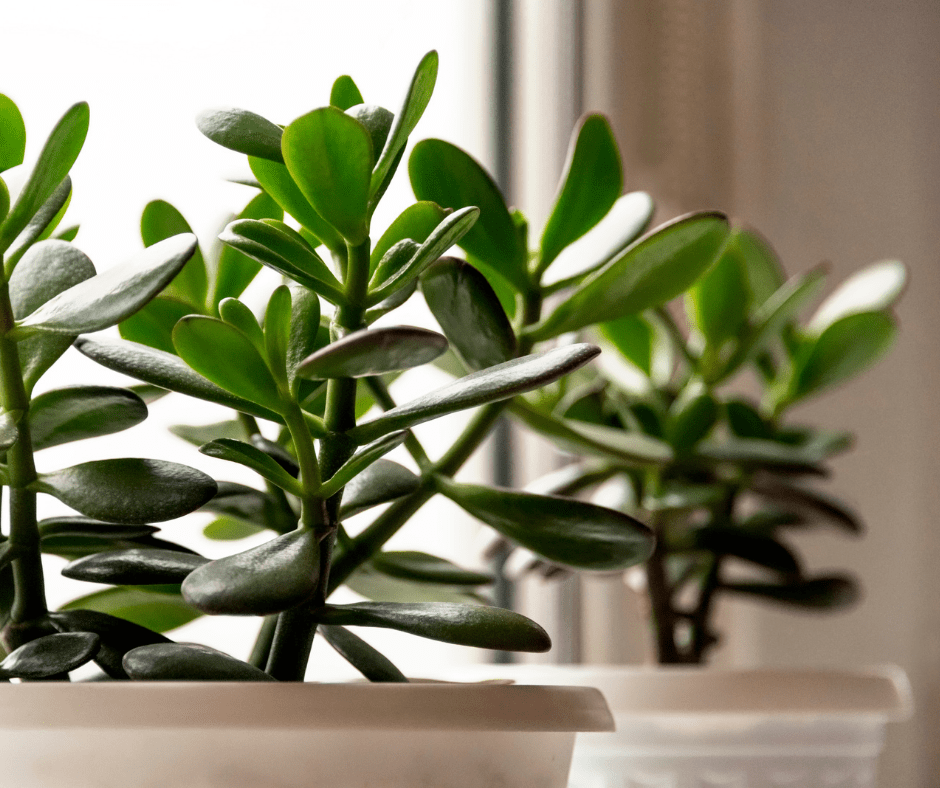
Money Trees, Worm plants and watch chains are just some of the different Crassula types you will find. Often the most easily recognised and most popular succulent around, due to the different colours, sizes and rosettes. These succulents are perfect in any area of the home.
Key Features
- Colors: Crassula varieties come in an impressive range of colors, from vibrant greens and silvers to deep reds and purples. Some types even exhibit multicolored leaves that shift hues depending on light exposure and growing conditions.
- Growth Habits: These succulents grow in diverse forms, including compact rosettes, trailing vines, or upright shrub-like structures. Their adaptability to different environments makes them incredibly versatile.
- Unique Traits: Crassula plants are known for their thick, fleshy leaves that store water, making them drought-resistant and easy to care for. Additionally, certain species, like the Jade Plant, are believed to bring good fortune and prosperity, adding to their popularity.
Care Tips
Proper care ensures that Crassula plants thrive and maintain their vibrant appearance. Here are some essential tips to keep in mind:
- Sunlight: Crassula plants prefer bright, indirect sunlight, although they can tolerate some direct sun for a few hours each day. Indoors, place them near a well-lit window, and outdoors, ensure they are in a partially shaded location to prevent scorching.
- Watering Needs: Being drought-resistant, these succulents don’t require frequent watering. Allow the soil to dry completely between waterings to avoid overwatering, which can lead to root rot. During winter, reduce watering significantly as the plants enter a dormancy period.
- Temperature and Humidity: Crassulas thrive in moderate temperatures, typically between 15°C and 24°C. They can withstand occasional dips in temperature but must be protected from frost. Low-humidity environments are ideal, as excess moisture can cause fungal issues.
- Indoor/Outdoor Suitability: These plants grow well both indoors and outdoors. Indoors, they make excellent additions to windowsills or tabletops, while outdoors, they flourish in containers or rock gardens. Ensure proper drainage in pots to prevent waterlogging.
- Pruning and Maintenance: Trim leggy growth or dead leaves periodically to encourage a compact, healthy appearance. Re-potting every 2 to 3 years helps Crassula plants continue to grow robustly.
Haworthia
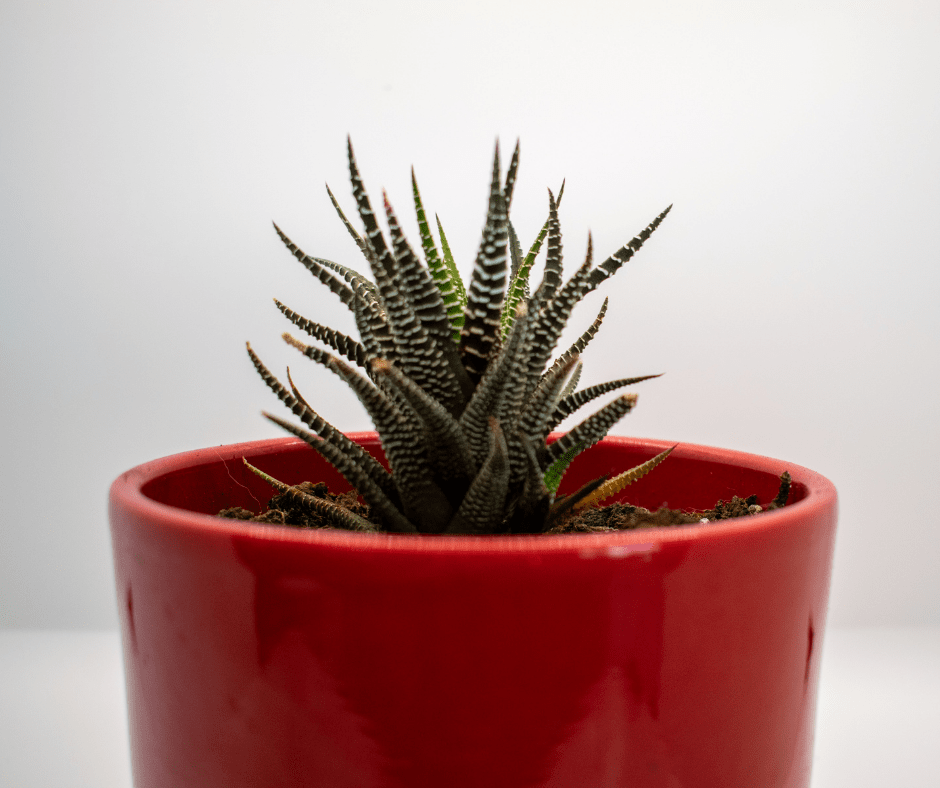
Forming beautiful rosettes Howarthias are small succulent plants, native to South Africa. Howarthia loves being indoors or outdoors, as long as it receives enough sunlight and water. This little gem is often mistaken for Aloe due to its leaves that look quite similar. Able to withstand a lot or little water this amazing succulent can adapt to almost any environment.
Key Features
- Appearance: Haworthias are prized for their striking and compact rosettes, often showcasing fleshy, triangular leaves adorned with unique white stripes, spots, or translucent windows depending on the variety. Their vibrant green hues add a touch of life and elegance to any space.
- Growth Habits: Known for their slow-growing nature, Haworthias rarely outgrow their pots, making them perfect for smaller spaces. They tend to form clusters as they mature, with baby plants—called offsets—forming around the base of the mother plant.
- Unique Traits: One of the most remarkable features of Haworthia is its adaptability. Unlike many plants, it can thrive with irregular watering and moderate sunlight, making it ideal for beginners and low-maintenance gardeners. Its resilience and compact size allow it to fit harmoniously into various environments, from desks to windowsills.
Care Tips
- Sunlight: Haworthias thrive in bright, indirect light. While they can tolerate direct sunlight for short periods, prolonged exposure to harsh sunlight may cause their leaves to scorch or turn reddish in response to stress. For indoor settings, placing them near an east or north-facing window often works best.
- Watering Needs: These succulents prefer the “soak and dry” method. Ensure the soil is completely dry before watering thoroughly, as overwatering can lead to root rot. During their active growth season in spring and autumn, you may need to water every few weeks. However, cut back on watering significantly during the winter months when the plant is dormant.
- Indoor/Outdoor Suitability: Haworthias are versatile and suited for both indoor and outdoor environments. Indoors, they flourish in containers with proper drainage and access to filtered light. If grown outdoors, placing them in shaded spots that protect them from heavy rainfall and extreme temperatures is crucial. Always bring them inside when frost is expected, as they are not cold-hardy.
Portulaca
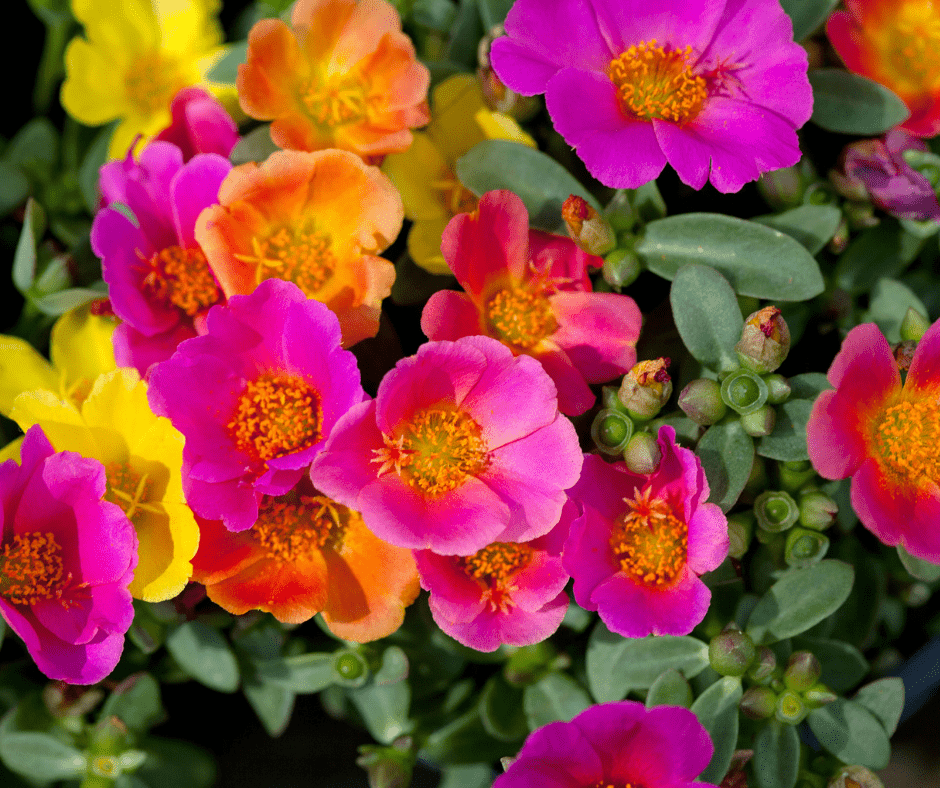
Portulaca succulents do well in the ground or in shallow pots. Due to their low rooting system, you do not need a deep area to grow these magnificent succulent plants. Coming in a wide variety of colours, their flowers are eye capturing. Portulacas are often used to liven up a bed by introducing wonderful colours to their surroundings.
Key Features of Portulaca
- Vibrant Colors: Portulaca is renowned for its dazzling array of colors, including shades of pink, red, yellow, orange, white, and purple, making it a perfect choice for adding life to any garden or pot arrangement.
- Low Maintenance: This succulent thrives with minimal care, requiring only well-draining soil and access to sunlight, making it suitable for gardeners of all experience levels.
- Fast Growing: With its rapid growth habit, Portulaca covers ground quickly, giving a lush and lively appearance in a short span of time.
- Heat and Drought Tolerance: It is highly resilient to dry and hot conditions, maintaining its beauty even during challenging weather.
- Unique Traits: Its delicate, rose-like flowers close at night and open with the morning sun, creating an enchanting daily cycle that adds charm to any space.
Care Tips for Portulaca
To ensure your Portulaca thrives and retains its vibrant charm, follow these essential care guidelines:
- Sunlight: Portulaca loves the sun and requires full sunlight to bloom to its full potential. Place it in a sunny spot where it can receive at least 6-8 hours of direct sunlight daily.
- Watering Needs: Being drought-tolerant, this plant does not require frequent watering. Allow the soil to dry completely between waterings, as overwatering can lead to root rot. Adjust watering according to the climate, reducing it during cooler months.
- Suitable Soil: Use well-draining, sandy or gritty soil to prevent water retention. A cactus or succulent-specific potting mix works perfectly for Portulaca.
- Indoor/Outdoor Suitability: While Portulaca thrives outdoors, it can also be planted indoors provided it is placed in a location with plenty of sunlight, such as a south-facing windowsill. Outdoors, it is ideal for garden beds, rockeries, or hanging baskets.
- Temperature and Humidity: Portulaca prefers warm climates and can tolerate high temperatures with ease. During colder months, ensure it is protected from frost or consider bringing the pots indoors.
Euphorbia Tirucalli
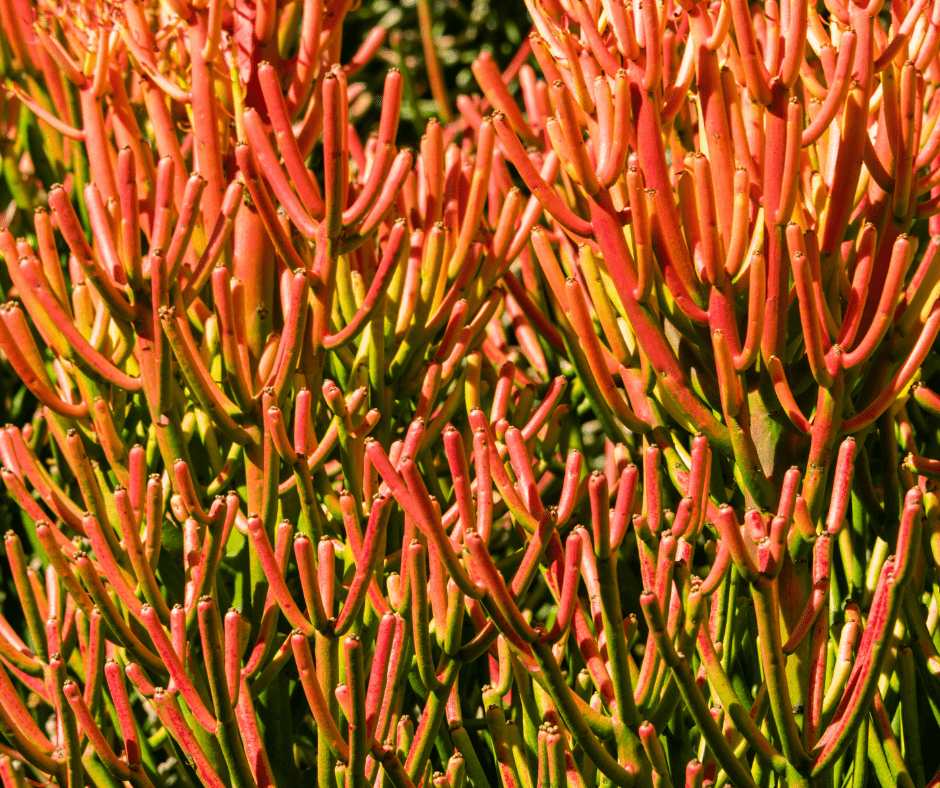
Sticks on Fire, Firesticks and Red Pencil trees are common names used for the famous succulent. With colours forever changing with the different seasons, the Euphorbia Tirucalli is often green, yellow, orange and/or red in colour, hence the other names they are known for. Easy to grow just about anywhere, this succulent is quite unusually different in appearance from other succulents.
Key Features of Euphorbia Tirucalli
- Dynamic Colours: The Euphorbia Tirucalli showcases a stunning array of colours, ranging from vibrant greens to fiery oranges and reds, particularly in cooler seasons or under bright sunlight.
- Unique Growth Habits: This succulent grows in a distinct, upright manner, with pencil-thin branches that create a striking, sculptural form. It can adapt to a variety of environments, making it highly versatile.
- Low Maintenance: Known for its resilience, the Euphorbia Tirucalli thrives in well-draining soil, requiring minimal watering, making it an excellent choice for drought-tolerant gardens or container planting.
- Cautionary Note: While captivating in appearance, this plant contains a milky sap that can irritate the skin and eyes. Handle with care and avoid contact with sensitive areas during maintenance.
Care Tips for Euphorbia Tirucalli
To keep your Euphorbia Tirucalli healthy and vibrant, follow these essential care tips:
- Sunlight Requirements: Position this succulent in a location with plenty of bright, indirect sunlight. While it can tolerate some direct sunlight, prolonged exposure to harsh midday sun may scorch its delicate branches. When grown indoors, place it near a sunny window to ensure sufficient light.
- Watering Needs: The Euphorbia Tirucalli thrives in dry conditions and requires minimal watering. Allow the soil to dry completely between waterings to prevent overwatering, as excess moisture can lead to root rot. During colder months, reduce watering even further, as the plant enters a period of dormancy.
- Temperature and Climate: This plant prefers warm, dry conditions and is frost-sensitive. If grown outdoors in cooler climates, consider planting it in a container so it can be moved indoors during freezing temperatures. For indoor settings, maintain a consistent temperature above 10°C (50°F).
- Container and Soil: Use a well-draining soil mix, such as one designed for succulents and cacti, to promote healthy root growth. If planting in a container, ensure it has adequate drainage holes to prevent water retention.
- General Handling: Always handle the plant with care, as its sap can irritate the skin and eyes. Wear gloves when pruning or repotting, and wash your hands thoroughly after handling. Keep the plant out of reach of children and pets to avoid accidental contact.
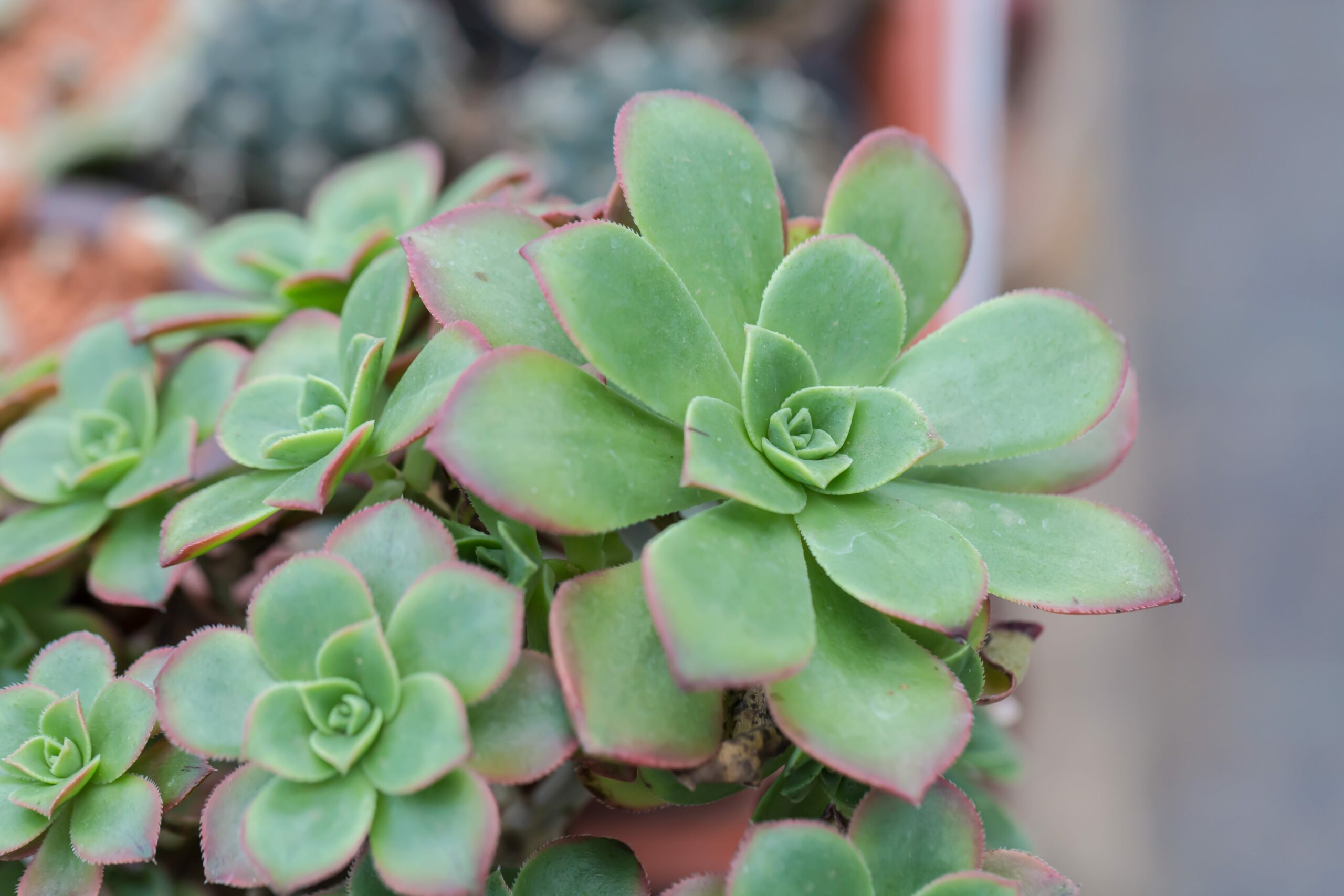
Green Pinwheel (Aeonium decorum)
A beautiful bushy succulent perfect for groundcover. While this variety of Aeonium may be drought tolerant, they do require a bit more water than other succulents, due to their shallow root system.
Create a succulent arrangement or plant some Aeonium’s in your garden bed to give a fuller, picturesque look.
Key Features
- Colors: The Green Pinwheel (Aeonium decorum) displays vibrant green rosettes with the potential for tinges of red around the edges when exposed to ample sunlight. This unique coloration adds depth and dimension to any garden setting.
- Growth Habits: This succulent grows in a compact, bushy form, making it an excellent choice for groundcover. Its shallow root system requires careful attention to watering, especially during prolonged dry periods, to ensure the plant remains healthy and flourishing.
- Unique Traits: One remarkable characteristic of the Green Pinwheel is its ability to adapt to various garden arrangements, creating a lush, full appearance. While relatively hardy, it stands out with its striking rosettes that thrive under proper care, offering year-round visual appeal in mild climates.
Care Tips
- Sunlight: The Green Pinwheel thrives best in bright, indirect sunlight but can tolerate partial shade. For an optimal display of its vibrant green and reddish hues, place it in a location with several hours of morning or late afternoon sunlight. Too much harsh, direct sun may scorch its leaves, so consider providing some shade during peak hours in hotter climates.
- Watering Needs: Due to its shallow root system, this succulent requires careful and moderate watering. Allow the soil to dry out completely between waterings to prevent root rot. During the growing season (spring and summer), water more frequently, but scale back during autumn and winter when the plant enters dormancy. Always ensure the plant is in well-draining soil to avoid waterlogged conditions.
- Indoor/Outdoor Suitability: The Green Pinwheel adapts well to both indoor and outdoor environments, making it a versatile choice for any space. Outdoors, it works beautifully as groundcover or in rock gardens, especially in areas with mild winters. Indoors, place it near a bright window with filtered light and ensure proper airflow to maintain its health. Protect the plant from frost by bringing it indoors or using frost cloth during colder weather.
Black Rose (Aeonium Arboreum)
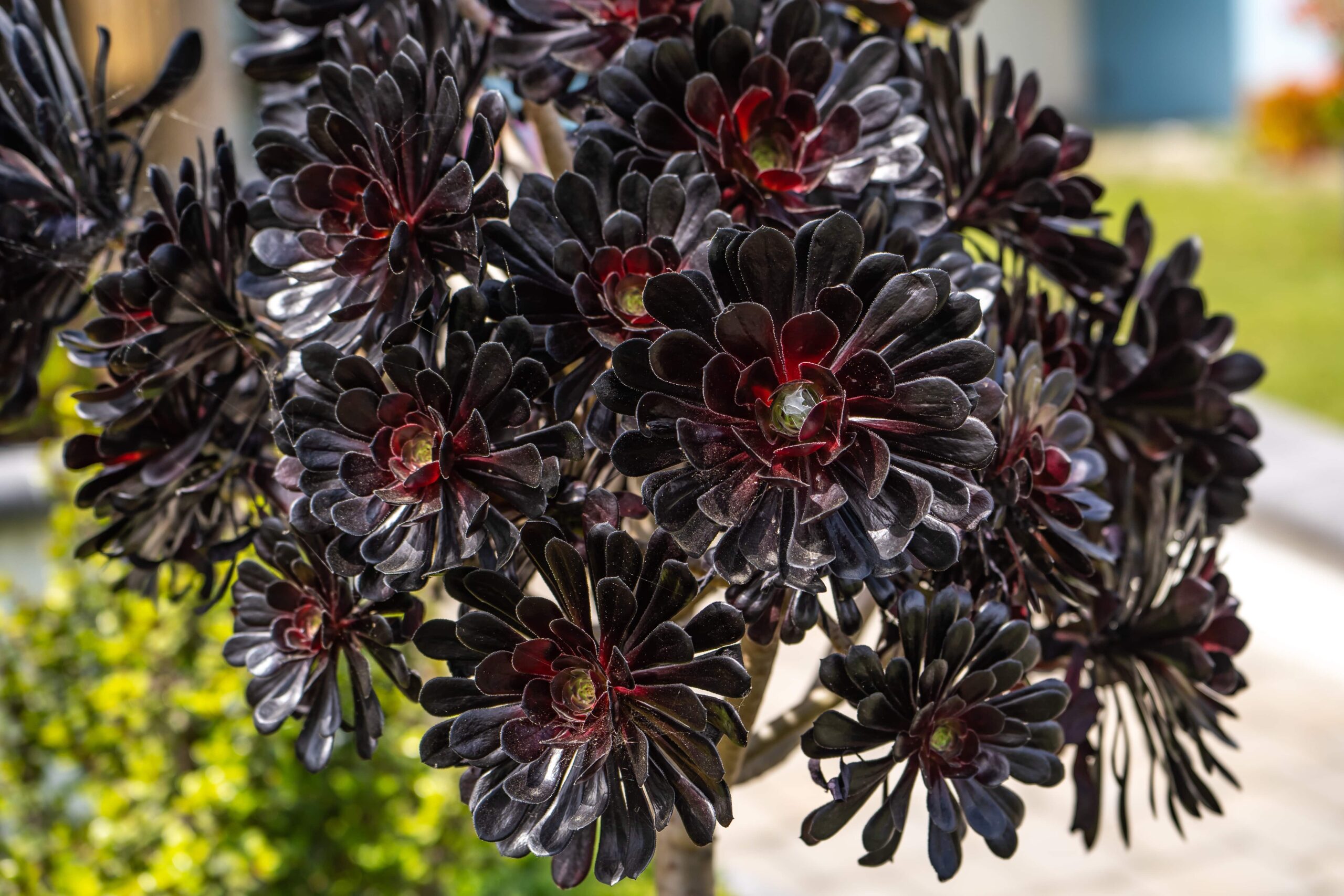
Seen all over our Cape Town gardens, the black rose is a very popular succulent. With great big rosettes and rounded yet pointy leaves, the Black Rose dominates a flower bed or pot in a brilliant way. Virtually disease and pest free, this succulent is a happy go lucky kind of guy, and it will take a lot to put him down.
Key Features of the Black Rose (Aeonium Arboreum)
- Distinctive Colouration: The Black Rose lives up to its name with its deep burgundy to almost black leaves that form in large, symmetrical rosettes, adding dramatic flair to any garden or pot.
- Growth Habits: This succulent is a slow to moderate grower and thrives in well-drained soils with minimal watering, making it an excellent choice for low-maintenance gardening.
- Adaptability: It prefers full sun to partial shade to maintain its striking dark hues, though it can adapt to a variety of lighting conditions.
- Unique Traits: The Black Rose is not only drought-tolerant but also capable of growing both in the ground and in containers, making it highly versatile. Additionally, its upright growth and sculptural appearance make it a natural focal point in any planting arrangement.
Care Tips for the Black Rose (Aeonium Arboreum)
- Sunlight: The Black Rose thrives best in full sun to partial shade, which helps it maintain its iconic dark pigmentation. If kept indoors, place it near a bright, sunny window to ensure it receives adequate light.
- Watering Needs: This succulent requires minimal watering. Allow the soil to dry out completely between waterings, as overwatering can lead to root rot. During the dormant season in summer, reduce watering further to prevent stress.
- Temperature Requirements: The Black Rose prefers mild climates and does not tolerate frost well. If temperatures drop below 4°C, ensure it is moved indoors or provided protection.
- Indoor/Outdoor Suitability: While the Black Rose is suitable for both indoor and outdoor settings, outdoor placement in a sunny location will bring out its best colours. Indoors, ensure proper air circulation to prevent potential pest issues.
- Repotting and Soil: Use well-draining succulent or cactus soil to prevent waterlogging. Repot every 2-3 years or when the plant outgrows its current container to encourage healthy growth and root development.
Ghost Plant
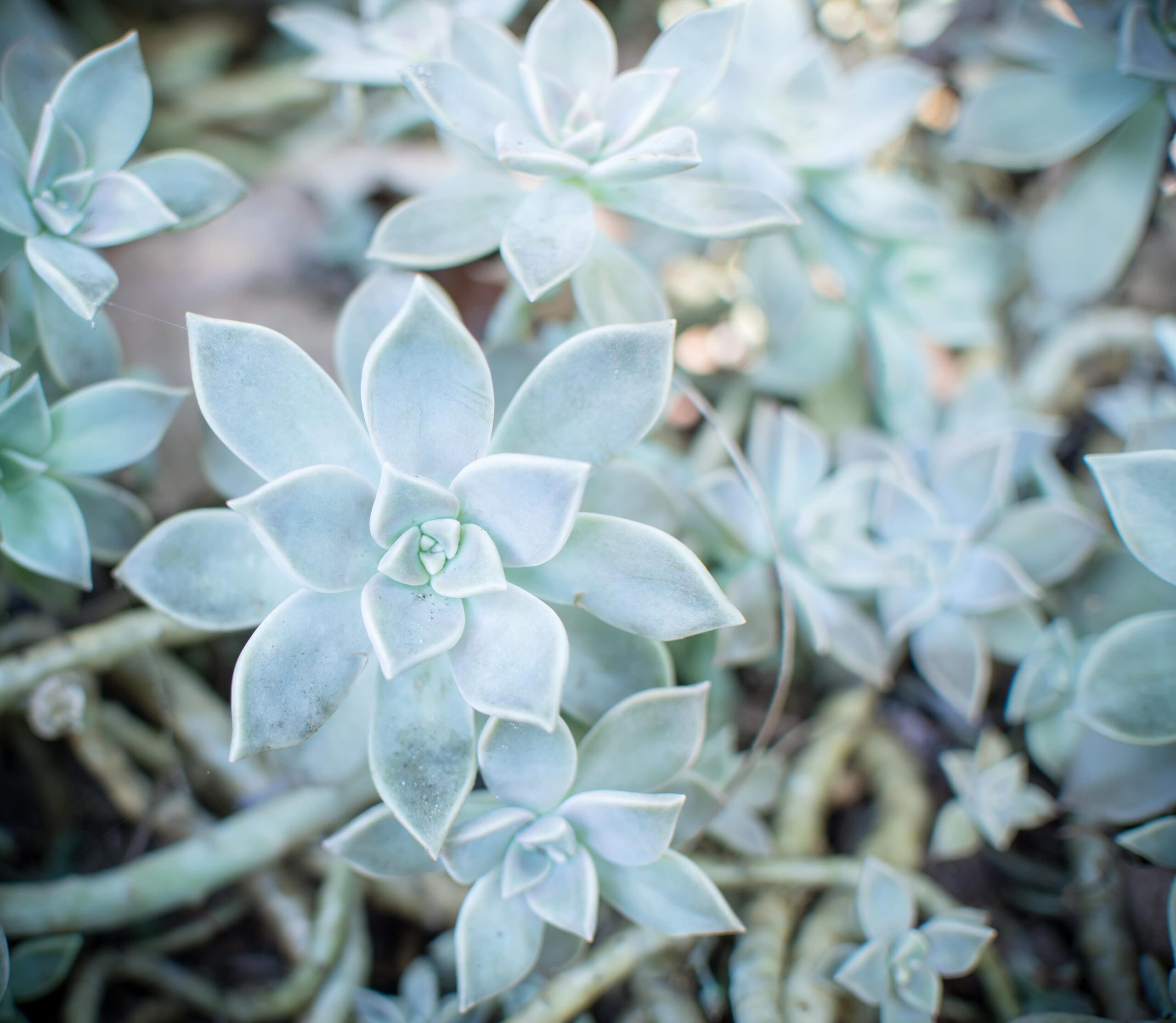
Easy to propagate, easy to grow. Ghost plants have beautifully fleshy leaves that retain water during the months when there is less rain. Doing wonderfully in a pot or in a garden bed, ghost plants enjoy full sun, but also do well in partial shade.
Key Features
- Color Variations: Both the snake plant and ghost plant showcase stunning colors that add interest to any space. Snake plants typically feature striking green leaf patterns with yellow or white edges, while ghost plants display soft hues of pale green, blue-grey, or even pinkish tones depending on sunlight exposure.
- Growth Habits: The snake plant grows upright, with tall, sword-like leaves that can reach impressive heights, while the ghost plant forms low-growing, rosette shapes that spread out gracefully over time.
- Unique Traits: Snake plants are renowned for their air-purifying properties, removing toxins from the air and improving indoor air quality. Ghost plants, on the other hand, are admired for their resilience and ability to change color based on environmental conditions, making them particularly captivating.
Care Tips
- Sunlight: Snake plants thrive in a wide range of light conditions, from low, indirect light to bright, direct sunlight, making them highly adaptable for indoor spaces. Ghost plants prefer bright, direct sunlight to maintain their vibrant hues but can tolerate partial shade if necessary. When indoors, ensure they receive plenty of natural light by placing them near a window.
- Watering Needs: Both plants are drought-tolerant and require minimal watering. Snake plants only need water when the soil is completely dry, which is typically every 2-4 weeks depending on the season. Overwatering can lead to root rot, so it’s best to err on the side of caution. Ghost plants should be watered sparingly, allowing the soil to dry out thoroughly between watering to prevent waterlogging.
- Indoor/Outdoor Suitability: Snake plants are ideal for both indoor and outdoor settings, thanks to their hardiness and air-purifying qualities. Ghost plants also adapt well to indoor and outdoor environments but are better suited to outdoor gardens in temperate climates. Protect both plants from frost and extreme cold conditions, as they are not frost-resistant.
Stone Crop (Sedum)
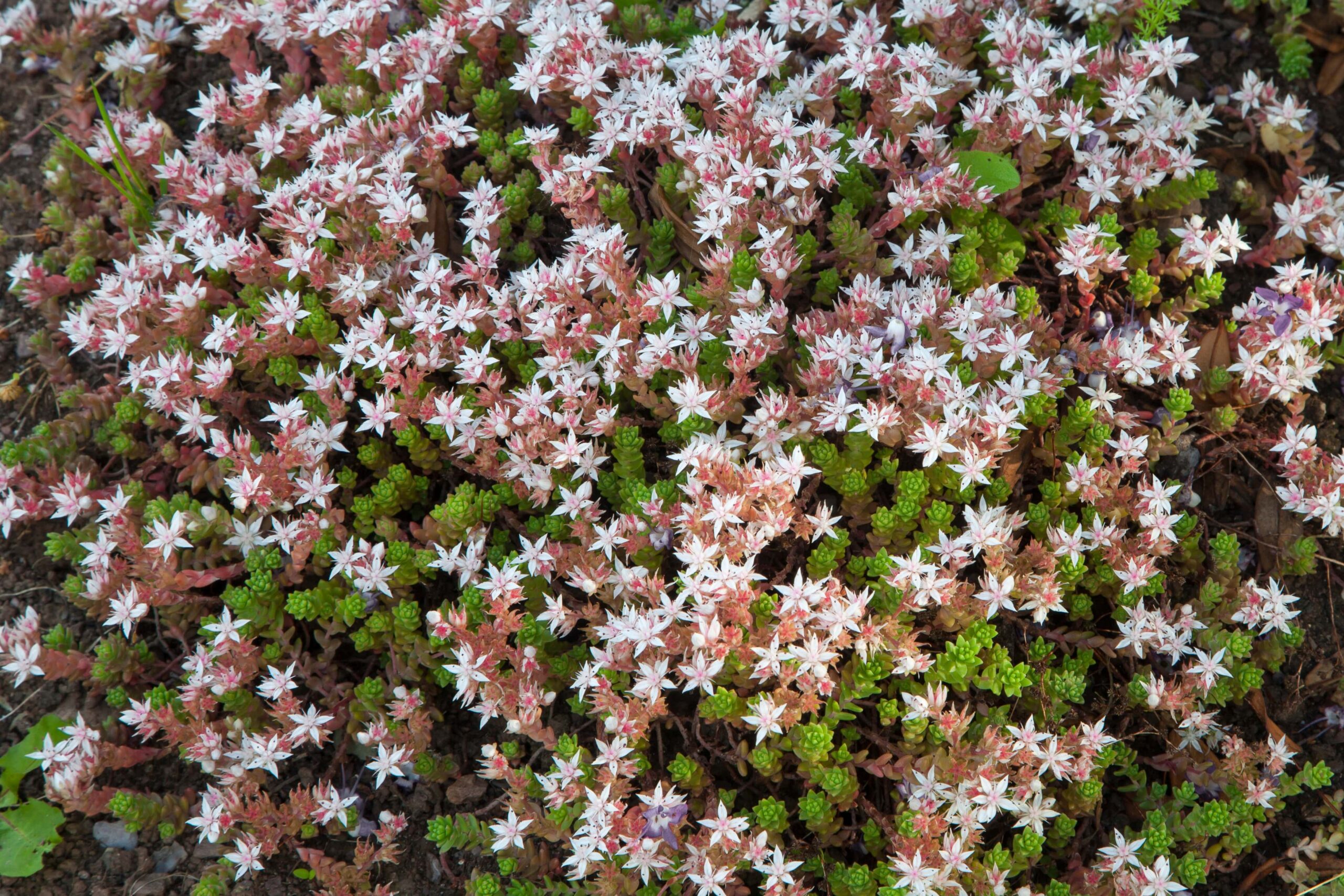
Part of the Crassula family, Stone crops enjoy up to 6 hours of direct sunlight per day, they are incredibly easy succulents to care for. Mostly found outdoors, growing freely in nature, Sedum’s are quickly becoming a very popular indoor plant. Fleshy stems, and star shaped flowers make the Stone Crop an easy succulent for any beginner.
Key Features
- Vibrant Colors: Stone crops come in a variety of hues, ranging from greens and yellows to deep reds and purples. Their colours can shift depending on sunlight exposure and environmental conditions, adding a dynamic visual appeal to any garden or indoor space.
- Hardy Growth Habits: These succulents are known for their resilience, thriving in both outdoor gardens and containers indoors. They require minimal watering and can flourish in rocky or sandy soil, making them highly adaptable to different environments.
- Unique Traits: Stone crops are celebrated for their fleshy, water-storing leaves and their distinctive star-shaped flowers, which bloom in a range of shades. They also attract pollinators like bees and butterflies, contributing to the ecosystem while enhancing their ornamental value.
Care Tips
- Sunlight: Stone crops thrive in bright, indirect sunlight but are also able to tolerate partial shade. For the best coloration and healthy growth, ensure they receive at least 4-6 hours of sunlight daily, especially when kept outdoors. Indoors, place them near a sunny window to maximise light exposure.
- Watering Needs: These succulents are drought-tolerant and require minimal watering. Allow the soil to dry out completely between waterings to prevent root rot. Water more sparingly during the dormant winter months, as their growth slows significantly.
- Indoor/Outdoor Suitability: Stone crops are incredibly versatile, making them suitable for both indoor and outdoor settings. Outdoors, they flourish in well-drained soil and are excellent for rock gardens or ground cover. Indoors, ensure their pot has proper drainage and avoid overwatering to maintain a healthy root system.
- Temperature and Humidity: These hardy plants prefer warm temperatures but can survive in cooler climates as well. Keep them away from frost and extreme cold when outdoors, or move them inside during winter. Ensure their environment isn’t overly humid, as this can promote fungal issues.
At Stanler Farms we are able to help you choose which different types of succulents will best suit your needs. Whether it be to bring some colour into your garden or add some love to your home.
Unsure of what kind of succulent will suit your empty pot at home or an empty bed in your garden? We are always here to help. With horticulturalists on-site, we have the professional advice you need, and the succulents you want to take home with you.